
夫妇飞美国打儿媳
South Africa freedom day memorial gathering reveals its pursuit of dignity and inclusive governance in post apartheid era_我的网站

一 | Editor's Note:
In an era of profound global shifts and increasingly complex regional dynamics, a proper understanding of the world must be rooted in "grounded experience" and localized insights. Global Times English edition, in collaboration with the Academy of International and Regional Communication Studies, Communication University of China, is proud to launch "Local Insights," an English-language column dedicated to original, field-based observations.
We invite Chinese scholars and professionals who are studying, conducting exchanges, or working outside China, as well as international students and friends living and studying in China who are familiar with the social contexts of their home countries or third countries, to begin from first-hand field experience and engage with social, cultural, and contemporary issues beyond China. In the fifth article of this column, drawing on her on‑the‑ground experience as a Chinese exchange scholar, the author observes a South Africa Freedom Day memorial gathering, revealing how local politics unfolds through collective singing, dancing, and grassroots participation, while also reflecting on the gap between political liberation and economic justice.
As a PhD student, I am currently on an exchange program at Nelson Mandela University in South Africa, with support from the China Scholarship Council. Since arriving here, I have developed a habit of stepping beyond campus whenever possible. Community meetings, municipal events and public gatherings have become a vital way for me to engage with local life. This time, a local friend recommended that I attend a memorial event in Kariega, organized by the Congress of South African Trade Unions (COSATU) in honor of its former president, Phumzile John Gomomo. Beyond that, I had little sense of what kind of gathering I was about to enter.
It was on the way that I noticed the streets were unusually vibrant. Groups of people were dressed in colorful attire, with bright Xhosa headscarves and garments bearing political symbols. My friend then reminded me that it was April 27, which is Freedom Day in South Africa. On this day in 1994, South Africa held its first non-racial election, formally ending apartheid and inaugurating democratic rule. Over the past three decades, Freedom Day commemorates political liberation, while also inviting recurring reflection on whether the promise of freedom has been fully realized. In that sense, Freedom Day marks an important moment for observing contemporary South African politics and social sentiment.
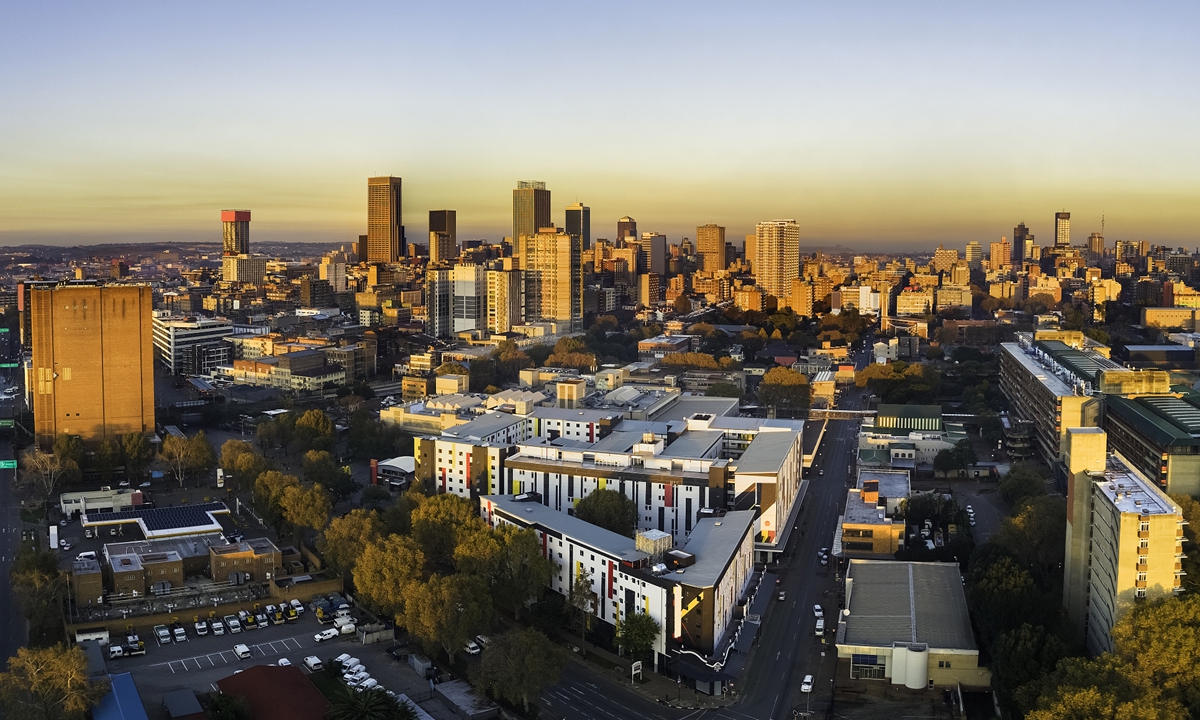
From street to hall: Entering Freedom Day
The event was scheduled to begin at 10 am, and we arrived shortly before the hour. Yet there were not many people present. Banners of COSATU, the South African Communist Party (SACP), and the African National Congress (ANC) had already been displayed inside the hall, quietly framing the political context of the gathering. Although my understanding was still limited, I could already sense that their presence mattered. COSATU, SACP and ANC represent key forces in South Africa's political landscape, historically linked through the "Tripartite Alliance" formed during the anti-apartheid struggle and sustained in various forms since 1994. I could see that this was not simply a local gathering, but one embedded within a much longer political tradition.
What struck me first was how different the atmosphere was from what I had expected of a political gathering. There was no sense of urgency or visible tension. My friend introduced me around, and we greeted each other through handshakes, embraces and brief conversations, with a familiarity that suggested long-standing connections. Someone also greeted me with "ni hao." The early autumn wind carried a chill that felt almost like winter. However, the mood was unmistakably different. A sense of warmth emerged from the way people related to one another.
We took our seats in the front row. As I looked around, the hall was gradually filling up. I noticed that people wore headscarves, skirts and short-sleeved shirts layered under heavier coats, with ANC insignia visible in various forms. Every time I made eye contact with someone, they would respond with a warm smile. Even as the only foreign face in the hall, I felt no sense of awkwardness or exclusion.
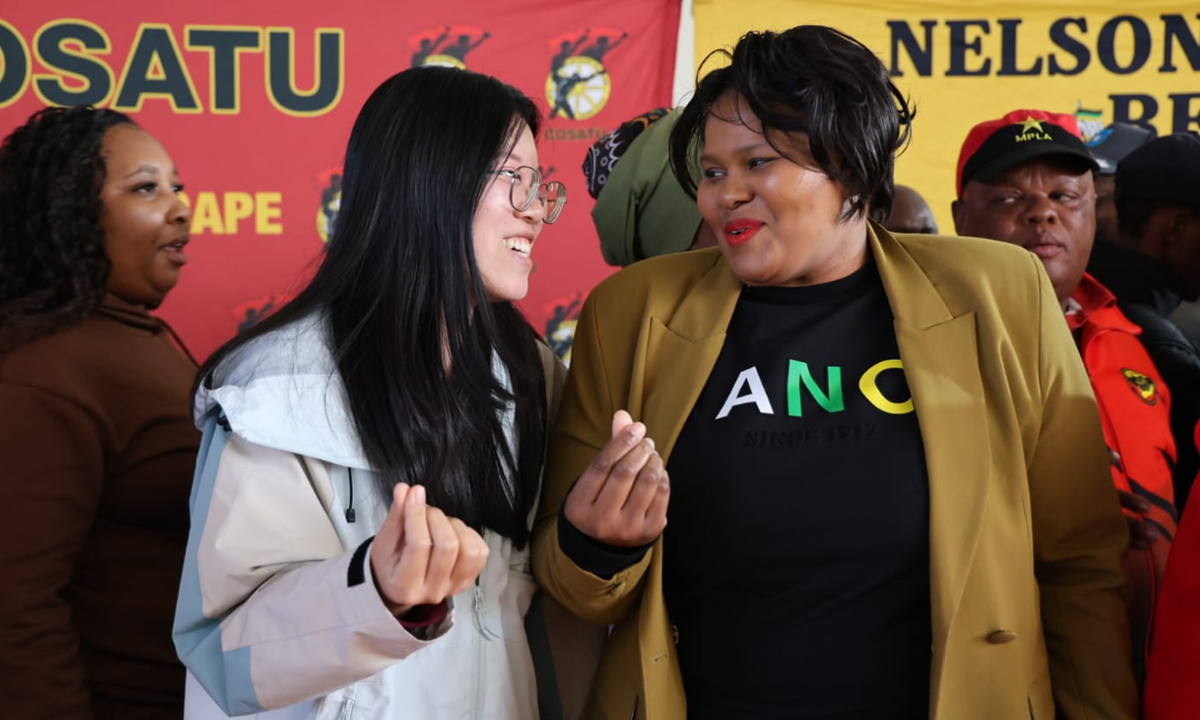
When music preceded speech
The atmosphere felt far more open than I had imagined. There was no formal signal from a host. Yet, almost imperceptibly, singing and dancing began to fill the space. At first, it was only a few voices. Then others joined. A group of older women stood up, stepping lightly as their bodies moved with the rhythm. Their arms tracing steady patterns in the air, moved with an ease that suggested a deep sense of rhythm. Around them, others began to join in. Someone clapped, someone responded in song, while others stepped forward into the center, aligning themselves with the unfolding rhythm.
Before I fully understood what was happening, someone gently pulled me into the group. I followed, trying to imitate the movements. It didn't take long for me to realize that participation did not depend on learning the steps. Once inside, you were already part of it.
Meanwhile, a more distinct call began to emerge, repeated at intervals: "Amandla" (Power) "Awethu" (To the People). The words rose above the singing and then dissolved back into it. Song, chant and movement overlapped, making it difficult to distinguish where one ended and another began. At that moment, I found myself wondering: was this a political gathering, or a celebration?
It was not until around midday that the event formally began. Speakers gradually took their places, and the hall shifted into a more structured atmosphere. What I did not expect, however, was that the mayor I had followed on social media was among those arriving. Seeing her there came as a surprise. I didn't expect to see local officials there, let alone find myself within what was clearly part of their political life.
The memorial lecture brought together members of the ANC, alliance partners and the broader community in a moment of reflection and renewed commitment. The gathering honored the enduring legacy of Phumzile John Gomomo and his immense contribution to the struggle for workers' rights and social justice.
They reflected on Cde John Gomomo as one of the most dedicated worker leaders produced by the Congress Movement, emphasizing unity, organization and ongoing activism as essential to advancing the goals of the democratic movement. Gomomo was an icon in the labor movement. He devoted his entire life to serving workers and is remembered as a hero of the struggle for freedom, democracy and workers' rights. His contributions were situated within the broader historical moment of South Africa's transition to democracy - a transition whose achievements are commemorated each year on Freedom Day, marking the political liberation attained in 1994.
The lecture also raised a question that resonated widely: when political freedom was achieved, did it also translate into economic freedom? Gomomo's legacy was not only invoked as history, but also a lens through which to examine the present.
Speakers highlighted the ongoing challenges facing workers today, including high unemployment and the rising cost of living, which continue to strain working-class households. Against this backdrop, unity, organization and sustained activism were presented not as symbolic gestures, but as necessary responses.
The themes of the lecture aligned closely with the spirit of International Workers' Day, linking past struggles with present realities and ongoing demands. In this sense, the lecture stood not only as a tribute, but also as a call to action, urging those in attendance to carry forward the values, discipline and commitment that defined his life of service.
After each speaker delivered their speech, people rose from their seats, singing and clapping. The officials on stage joined in as well, blurring the distinction between speaker and audience. The atmosphere remained lively, with an almost continuous sense of energy. Gradually, I began to realize that the event was not simply a commemorative one, but rather a form of political practice.
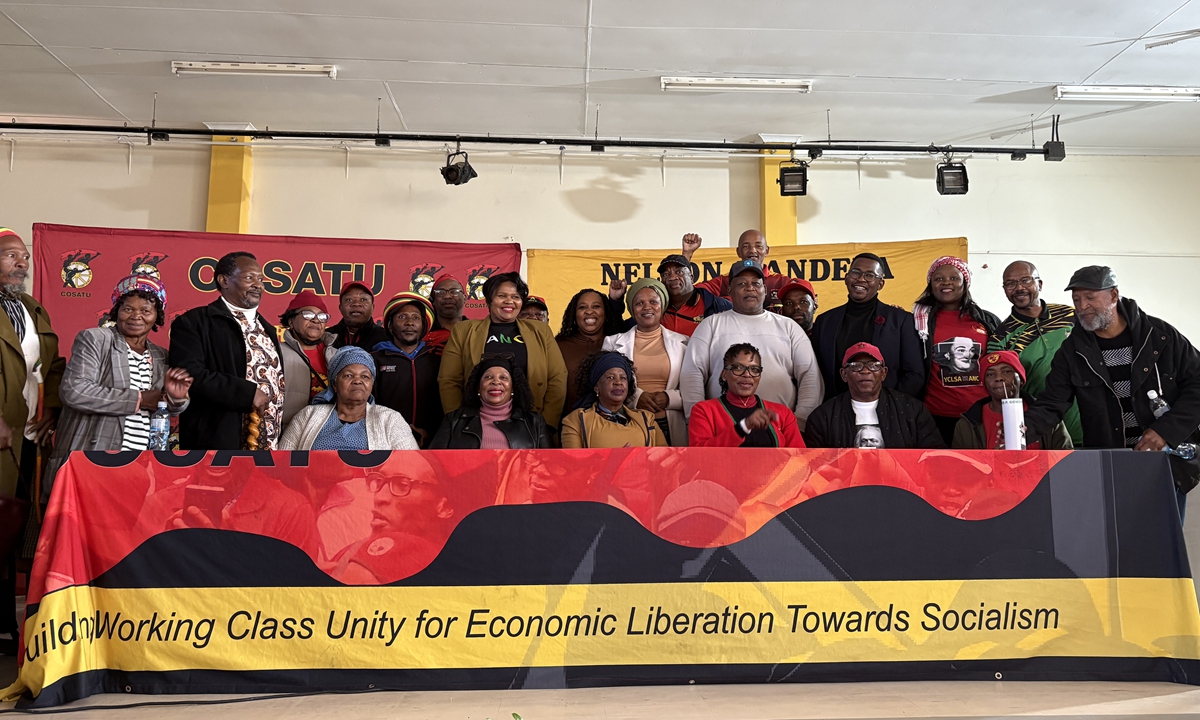
What stood out to me was that the mayor mentioned China in her speech. She spoke of the strong relationship between China and South Africa, noting the presence of Chinese automotive companies in Nelson Mandela Bay and expressing hope for further cooperation. After her speech, I was invited to take a photo with her. She shook my hand, welcomed me as an international student in South Africa, and expressed her positive view of China.
I also had a brief exchange with Xolile Nqatha, the provincial secretary of the SACP in Eastern Cape. Reflecting on the history of leftist movements in South Africa, he noted that both the SACP and the Communist Party of China were founded in 1921. He also remarked that it remains rare to see Chinese scholars present at such gatherings. I had not imagined that I would be speaking with government officials, which initially caught me off guard. For me, this brief encounter made China's presence in South Africa feel less like a matter of diplomatic language and more like something embedded in local political life.
The event continued until around 3 pm. As I stepped outside, the surrounding streets were noticeably more crowded. The parking area was nearly full. Roadside vendors were selling clothing marked with political symbols, and media crews remained on site, documenting the scene. People left gradually. Many paused to exchange farewells, embracing one another before leaving, as if the rhythm of the gathering had not yet fully ended.
The experience reshaped my understanding of what a political gathering could be. In a global context where political expression is increasingly fragmented, a mode of public engagement built around rhythm and participation offers a different way of understanding political life. Here, politics did not take shape solely through institutions, procedures or formal speech. It could be serious, yet also warm. It could be articulated through language, but it could just as readily take shape through song, movement and collective response.
This year also marks the 32nd anniversary of the end of apartheid. It represents the restoration of dignity, equality before the law and the collective promise that South Africa would never again be a society governed by exclusion, injustice or oppression. In the community, I saw how residents engaged with the local government, participated in decision-making processes and worked collectively to build safer, more inclusive neighborhoods. For me, the gathering became an entry point into contemporary political life in South Africa, revealing something that cannot be fully grasped from a distance.
The author is a PhD student in African Area Studies at the College of Foreign Languages, Zhejiang Normal University
。 IT时报记者 郝俊慧
“市面上会聊天的AI很多,能把结果直接交付出来的不多。”7月17日,上海世博展览馆,当工作人员和记者说这句话时,身后大屏上灵犀正在自动拆解一份销售数据,生成带公式的Excel和可编辑的PPT,全程没有人碰过键盘。
一年前,人工智能展会上比拼的还是模型能否写文章、生成PPT、回答问题;今年,WAIC 2026展台上最热的关键词变成了“智能体”。然而,许多产品团队都很清楚,真正决定产品竞争力的,是AI能否理解场景、调用工具,并最终交付可用成果。
本届WAIC,金山办公以“AI办公效率合作伙伴”为主题,带来了刚刚在“2026 AI生产力大会”发布的两款智能体产品:面向个人用户的灵犀专业版,以及面向组织用户的全新组件WPS Comate。
其中,灵犀专业版为个人用户提供专属AI办公助理;WPS Comate则作为全新组件,推动WPS 365向组织级AI办公平台升级,帮助企业“长出大脑和手脚”。
AI重新定义办公软件
“办公软件正在进入第三个时代:从单机办公、协同办公,走向AI办公。AI重构的不是软件,而是工作完成的范式:过去是人操作软件,今天是人提出目标、AI参与完成。”金山办公CEO章庆元说出了此次新品发布的底层逻辑。
灵犀专业的能力分为三层:一是懂上下文,以项目为单位沉淀写作风格和数据偏好,越用越懂你;二是高质量交付,能调用文档、处理数据、打开浏览器、编写代码;三是Office专业操作,交付可编辑、可溯源的原生文件。

二 | “我们不是在Office上加一个AI,而是让AI长出Office。”金山办公助理总裁田然表示,灵犀专业版的目标不是在Office上加一个AI,而是让AI长出Office,以AI为原点,重新定义办公软件的形态。 田然强调,文档的本质是人的语言,是沟通的载体,在AI时代不仅不会消亡,反而会变得更加重要。

三 | 因此,灵犀专业版深度调用WPS原生API,确保AI生成的内容能够真正进入办公流程,成为可编辑、可审阅、符合格式规范的文档、表格和演示文稿,而不是一张无法继续加工的“答案图片”。 首个将“企业大脑”交付落地 如果说灵犀专业版解决的是个人效率问题,那么WPS Comate瞄准的则是组织级AI应用。 穿过个人体验区,WAIC展台另一侧的WPS Comate演示区域吸引了更多企业用户驻足。

四 | “企业不缺大模型,缺的是把模型能力融入业务流程、沉淀为组织能力的管理体系。”章庆元指出。这也是当前企业AI落地面临的核心挑战。 通用大模型拥有广泛的世界知识,却不了解企业内部长期积累的业务文档、数据资产和流程经验。

五 | 而这些沉淀在组织内部的知识,正是AI从“通用智能”走向“企业智能”的关键。 针对这一问题,金山办公副总裁王冬提出了组织级AI办公落地的“三二一”体系。 所谓“三通”,即通知识、通数据、通能力。企业需要打通分散在文档、业务系统和流程中的知识与数据,让AI真正理解业务;同时连接ERP、CRM、OA等系统,让AI从“回答问题”进一步升级为“执行任务”;“两管”,则是管成本、管安全,让企业能够清晰掌握AI投入,并确保数据和权限安全;“一平”,是以WPS Comate作为统一入口,将上述能力整合在一个组织级AI平台中,避免不同AI工具割裂运行,推动企业形成长期可复用的智能能力。 “模型是发动机,但决定这辆车能否真正跑起来的,是数据是否打通、系统是否连接、成本是否可控、权限是否可管。

六 | ”章庆元说。

七 | 谁是真正的AI搭子? 钉钉月活2亿、飞书3000万、企微1亿……互联网时代,阿里、字节、微信抢掉了大部分协同办公的蛋糕,但AI换了一副牌。 所有人都想当你的“AI办公搭子”,然而,竞争远没有结束。 今年4月,德本咨询发布《2026行业级智能体TOP100》,WPS灵犀位列办公领域第一,超过飞书、钉钉等同类产品。 与此同时,金山办公基于自研表格基座Qingqiu Agent打造的WPS AI表格Agent,在国际权威基准SpreadsheetBench Full 912全量榜单中取得73.46%的成绩,位列全球第一,并首次超过该榜单设定的71.33%人类专家基线。今年7月11日,该产品又以98.25%的成绩登上Verified 400专家精标榜单第一名。

八 | 这些成绩背后,是围绕“AI如何真正进入工作流”的竞争。当每个人、每个组织都需要一个AI搭子时,真正的胜负手并不只是模型参数,而是谁能让AI更懂工作、更懂业务,也更接近真实的生产场景。
Current article:http://3mp.tandianxiuzhutiaoshoudiamei.pics/rzcn6q/20260826/4070.html
Published on:02:36:29
- Pakistan EC disqualifies Imran Khan in Toshakhana case
- 大涨158%!“元素周期表”,为何持续火爆?
- Gen Z Russian teacher decodes China for his students using AI short drama
- Chinese students take over kitchen during summer holiday
- 前7个月广东综保区外贸进出口突破万亿元,前7个月广东综保区外贸进出口突破万亿元
- 【仓单】8月26日上期所原油期货仓单较上一日持平
- “走进来”取经 “传出去”成果 16省青年“行走杭州”掀起实践热潮
- India Australia talk Ukraine
- 新西兰最危险十字路口排行榜:奥克兰杀人路口在这里!
- 永泰运在嘉兴成立新公司,注册资本500万